How to Design a Custom custom t-shirts: From Concept to Bulk Production
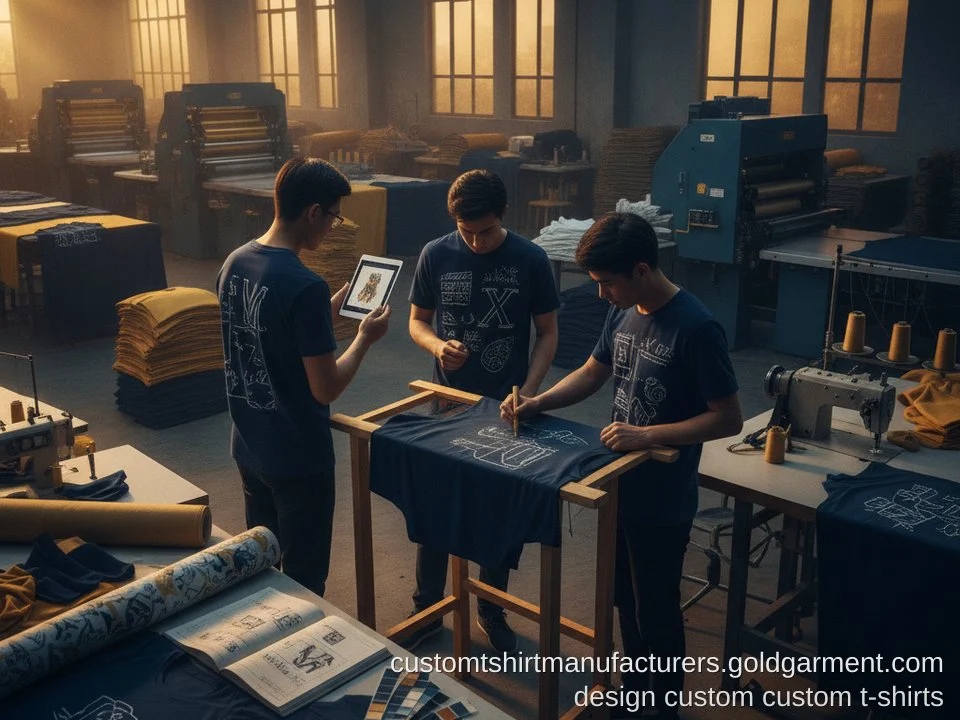
How to Design Custom T-Shirts: From Concept to Bulk Production
Embarking on the journey to design custom custom t-shirts for your brand or collection is an exciting endeavor. For designers creating their first custom t-shirt line, understanding the process from initial concept to final bulk production is crucial for success. This guide will walk you through each essential step, ensuring your vision translates seamlessly into high-quality apparel.
At Custom T-Shirt Manufacturers, operated by Gold Garment in Ho Chi Minh City, Vietnam, we specialize in bringing your unique apparel ideas to life. With a commitment to factory-direct pricing and a minimum order quantity (MOQ) of just 100 pieces, we make professional t-shirt manufacturing accessible worldwide. Let's dive into how to effectively design custom custom t-shirts.
1. Conceptualization and Design Brief
The first step in creating custom t-shirts is to define your concept. What is the purpose of these shirts? Are they for a brand launch, a promotional event, a band, or a personal collection? A clear understanding of your target audience and the message you want to convey will guide your design choices.
Develop a design brief that outlines your vision. This document should include:
- Brand identity and aesthetic
- Target audience demographics
- Overall theme and mood
- Color palette preferences
- Specific graphic elements or imagery
- Desired placement and size of designs
This brief will serve as the foundation for all subsequent design decisions and will be invaluable when communicating with your manufacturing partner. For a deeper understanding of how to articulate your needs to a factory, consult our Vietnam factory tech pack guide.
2. Developing Your Artwork
Once your concept is solidified, it's time to translate it into visual artwork. This is where your creativity takes center stage. Whether you're a seasoned graphic designer or working with one, ensure the artwork is print-ready.
Key considerations for your custom t-shirt artwork file:
- File Format: Vector files (AI, EPS, SVG) are preferred for their scalability without loss of quality. High-resolution raster files (PSD, TIFF, PNG) at 300 DPI are acceptable for certain printing methods, but vector is always ideal for crisp, clean prints.
- Color Mode: Use CMYK for most printing processes, as this is how inks are mixed. Pantone colors can also be specified for precise color matching.
- Outline Fonts: Convert all text to outlines to avoid font substitution issues.
- Bleed and Trim: If your design extends to the edge of the garment, include a bleed area to ensure no white edges appear after cutting.
Creating compelling custom t-shirts design for brand requires attention to detail. The quality of your artwork directly impacts the final product's appearance.
3. Understanding T-Shirt Styles and Fabrics
The style and fabric of your t-shirt are as important as the artwork itself. Choosing the right combination will enhance the wearer's experience and the overall appeal of your design.
Consider the various t-shirt styles available, from classic crew necks to modern v-necks and performance options. Each style offers a different fit and aesthetic, and the fabric plays a crucial role in comfort, durability, and how the print will appear. Learn more about the different options in our T-Shirt Styles Guide.
Our Custom T-Shirts Fabric Guide details the properties of popular materials like cotton, polyester, and tri-blends, helping you select the best fit for your brand and design.
4. Creating a Tech Pack
A custom t-shirts tech pack is a blueprint for your garment. It’s a comprehensive document that provides manufacturers with all the necessary information to produce your t-shirt exactly as you envision it. This is a critical step for ensuring accuracy in bulk production.
A detailed tech pack typically includes:
- Technical Flats: Detailed drawings of the garment from front, back, and side views, showing seam lines, stitching details, and any special construction.
- Measurements: Precise measurements for all garment components (e.g., chest width, body length, sleeve length).
- Materials: Specific fabric type, weight, and color codes.
- Colorways: All intended color options for the garment.
- Artwork Placement: Detailed specifications for all graphic elements, including size, placement (e.g., center chest, left sleeve), and color (Pantone or CMYK).
- Printing/Embroidery Details: Information on the type of print (screen print, DTG, embroidery), number of colors, and any special finishes.
- Labeling and Packaging: Instructions for care labels, brand tags, and how the finished products should be packaged.
A well-prepared tech pack minimizes errors and streamlines the manufacturing process, especially when working with overseas partners. This document is essential for any brand looking to achieve consistent quality. For those new to this, our Vietnam factory tech pack guide offers valuable insights.
5. Sampling and Prototyping
Before committing to a large production run, it's essential to create samples. This allows you to physically assess the design, fit, fabric, and print quality. It's a crucial quality control step.
Requesting a pre-production sample (PPS) or a prototype allows you to:
- Verify the accuracy of your tech pack specifications.
- Check the color matching of the ink to your artwork.
- Assess the feel and drape of the fabric.
- Confirm the overall fit and comfort of the garment.
- Identify any potential issues before mass production.
Working with a reliable manufacturer like Gold Garment means you can expect professional sample development. This stage is vital for ensuring your final product meets your expectations.
6. Bulk Production and Quality Control
Once you've approved the samples, you can move forward with bulk production. At this stage, your chosen manufacturer will produce the entire order based on the approved specifications.
Reputable manufacturers implement rigorous quality control measures throughout the production process. This includes checking fabric quality, pattern cutting accuracy, stitching, printing consistency, and final garment inspection. For example, a real case from a Vietnam uniform t-shirt factory Gold Garment showcases their dedication to consistent quality in large-scale orders.
Your minimum order quantity (MOQ) of 100 pieces per style, as offered by Custom T-Shirt Manufacturers, allows for efficient production runs even for smaller brands. Understanding the implications of MOQs is vital; learn more in our guide on Minimum Order Quantity for Custom T-Shirts.
7. Worldwide Shipping and Delivery
A key advantage of partnering with a manufacturer like Gold Garment is their capability for worldwide shipping. Whether your brand is based in the USA, Europe, Australia, or Southeast Asia, your custom t-shirts can be delivered directly to your doorstep.
This global reach simplifies the logistics of sourcing apparel from Vietnam, enabling you to access factory-direct pricing and high-quality manufacturing without geographical limitations. This streamlined process is ideal for brands looking for efficient and cost-effective production solutions. Whether you're looking for OEM or private label services, understanding the manufacturing models is beneficial. Explore the differences in our OEM vs Private Label Custom T-Shirts Manufacturing article.
Frequently Asked Questions
Q: What is the most important document when I design custom custom t-shirts?
A: The most crucial document is the custom t-shirts tech pack. It serves as the complete instruction manual for the manufacturer, detailing every aspect of the garment's design, measurements, materials, and construction. A well-defined tech pack minimizes errors and ensures your vision is accurately translated into the final product.
Q: Can I use any image I find online for my custom t-shirt artwork?
A: No, you generally cannot use images found online without proper licensing. Doing so can lead to copyright infringement issues. Always ensure you have the legal rights to use any artwork, logos, or imagery you provide for your custom t-shirts design for brand. It's best to create original artwork or use royalty-free assets.
Q: What is the benefit of working directly with a factory like Gold Garment?
A: Working directly with a factory like Gold Garment, based in Ho Chi Minh City, Vietnam, offers significant advantages. These include factory-direct pricing, greater control over the manufacturing process, and the ability to communicate directly with the production team. This often leads to better quality, faster turnaround times, and a more cost-effective solution for bulk orders.
Q: How do I ensure the colors in my design will look correct on the t-shirts?
A: To ensure accurate color reproduction, provide your artwork in CMYK color mode or specify exact Pantone colors. Discuss your color expectations with your manufacturer during the sampling phase. Approved samples serve as the benchmark for the production run, ensuring the final colors match your specifications as closely as possible.
With a clear understanding of these steps, you are well-equipped to bring your custom t-shirt concepts to life. Partnering with an experienced manufacturer like Custom T-Shirt Manufacturers by Gold Garment ensures a smooth transition from design to high-quality bulk production.
📩 Request a Free Quote — Response Within 5 Minutes
🌎 Website: customtshirtmanufacturers.goldgarment.com
Factory-direct pricing · MOQ from 100 pcs/style · Sample development · Worldwide shipping
.jpg)
.jpg)
.jpg)
Nhận xét
Đăng nhận xét